Includes :
Not included:
Discover the Grand-Place
royal galleries
City tour and free time
Check-in and evening out
Stroll through the historic center
Visit the castle of the Counts of Flanders
Panoramic view from the belfry
Canals and bell towers
Boat tour
Tastings and free time
Stroll around the Grand-Place
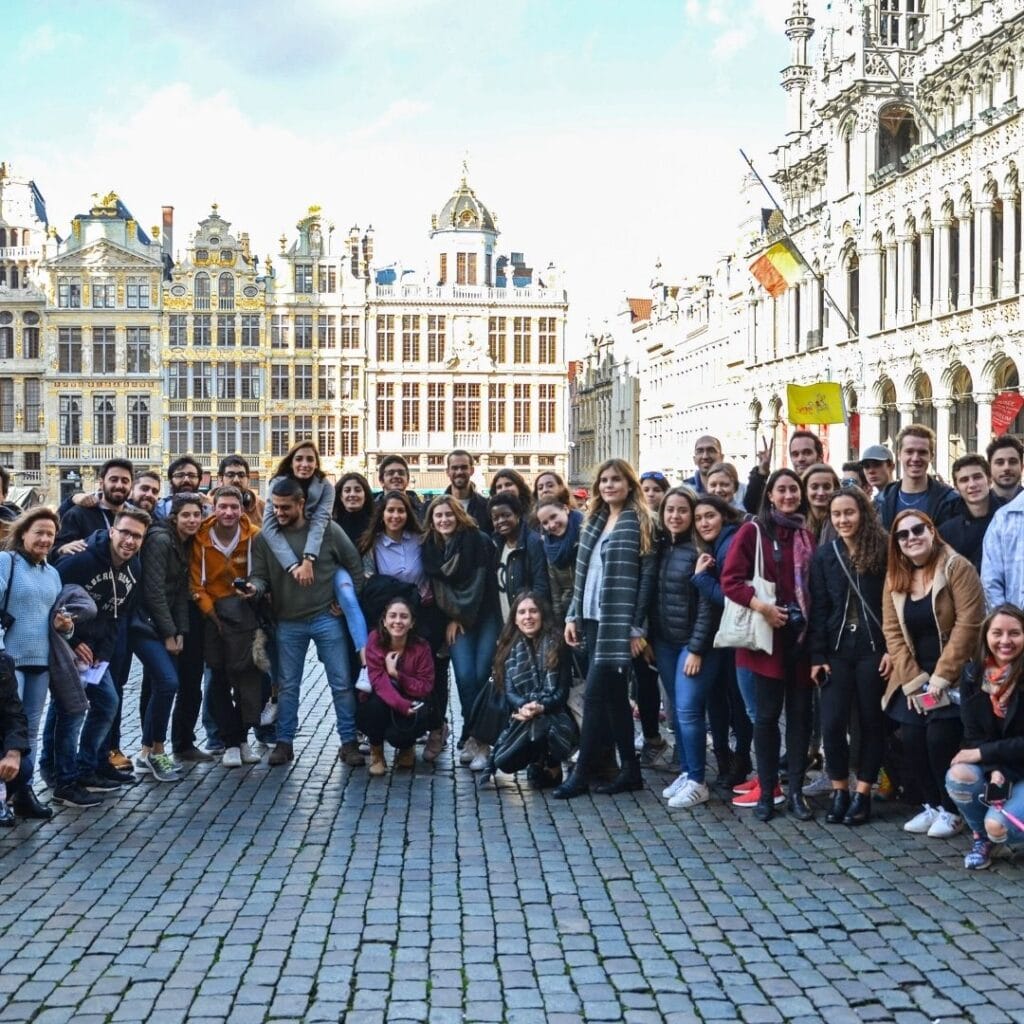
Leaving Paris in the morning, we set off for Belgium. First stop: Brussels, where we start exploring the city center. Between the Grand-Place, the Manneken Pis and the Royal Galleries, you can explore at your own pace or follow the group. You can enjoy a real Belgian waffle, sit on a terrace with a local beer, or simply stroll through the lively streets.
In the late afternoon, we head for Ghent. Less well known than Bruges, but just as beautiful, this medieval city is full of charm and atmosphere. We settle into our hostel in the center of town, then meet up for an evening outing together. You'll see that Ghent by night is incredible!
After breakfast at the inn, in the book in the morning to finish discovering Ghent. Back on the road to Bruges. This is one of Belgium's jewels: Flemish houses, cobbled streets, canals, stone bridges... the city seems like something out of a fairy tale. Everyone can discover it in their own way: a stroll, a boat trip, a visit to a chocolate factory or shopping in one of the small local boutiques.
It's a quiet day, perfect for enjoying the atmosphere, blowing up your Instagram and relaxing before the return trip. At the end of the afternoon, we take the bus back to Paris, with our heads full of memories.
Discover the Grand-Place
royal galleries
City tour and free time
Check-in and evening out
Stroll through the historic center
Visit the castle of the Counts of Flanders
Panoramic view from the belfry
Canals and bell towers
Boat tour
Tastings and free time
Stroll around the Grand-Place
With the Erasmus Place membership card you can benefit all year round! Pssst, it's not compulsory to take part in trips!

The capital of Belgium, Brussels combines institutions, culture and gastronomy. The Grand-Place is a must-see, as are the little streets around it, with their typical stores and bars. The Atomium, built for the 1958 Universal Exhibition, is one of the country's most recognizable symbols.
Did you know?
The Manneken Pis changes outfit several times a week. It even has an official wardrobe of over 1,000 costumes on display in the city's museum.
Nicknamed the Venice of the North, Bruges is a city of charm. The canals, the bridges, the brick houses, all give the impression of being in a living postcard. Perfect for a romantic getaway or with friends.
Did you know?
The historic center of Bruges is a UNESCO World Heritage Site. Its belfry rises to over 80 meters, and offers a breathtaking view after 366 steps.
Less touristy than Bruges, but just as impressive, Ghent is a lively medieval city full of contrasts. Its center is criss-crossed by canals, lined with Flemish houses, castles and Gothic buildings.
Did you know?
The castle of the Counts of Flanders, right in the center of Ghent, has served as a prison, a court and even a textile mill. Today, it is one of the city's most visited monuments.

The capital of Belgium, Brussels combines institutions, culture and gastronomy. The Grand-Place is a must-see, as are the little streets around it, with their typical stores and bars. The Atomium, built for the 1958 Universal Exhibition, is one of the country's most recognizable symbols.
Did you know?
The Manneken Pis changes outfit several times a week. It even has an official wardrobe of over 1,000 costumes on display in the city's museum.

Nicknamed the Venice of the North, Bruges is a city of charm. The canals, the bridges, the brick houses, all give the impression of being in a living postcard. Perfect for a romantic getaway or with friends.
Did you know?
The historic center of Bruges is a UNESCO World Heritage Site. Its belfry rises to over 80 meters, and offers a breathtaking view after 366 steps.

Less touristy than Bruges, but just as impressive, Ghent is a lively medieval city full of contrasts. Its center is criss-crossed by canals, lined with Flemish houses, castles and Gothic buildings.
Did you know?
The castle of the Counts of Flanders, right in the center of Ghent, has served as a prison, a court and even a textile mill. Today, it is one of the city's most visited monuments.
At Erasmus Place, the journey begins as soon as you get on the bus. It's a friendly atmosphere, where people get to know each other, have a laugh and share music and tips.
Our buses are comfortable, air-conditioned and equipped with toilets, barring major exceptions. We want you to feel at ease, even during several hours of driving. To make sure everything goes smoothly, we also have a few simple rules: respect for everyone, no inappropriate behavior, no consumption of alcohol or banned substances on the bus.
For each trip, we select quality establishments, always with a minimum 2-star rating for hotels. Whether it's a hotel or a hostel, you can count on comfortable, clean and conveniently located accommodation.
Our hotels and hostels are always located in the city center, close to places of interest and local entertainment, so you can make the most of your stay without wasting time in transport. With a few exceptions.
Rooms are shared among friends, in a relaxed atmosphere, but we respect a simple rule: men stay with men, women with women. Rooms are divided into groups of 2, 3 or 4 people, depending on the configuration of the site. If you're traveling as a couple, it's possible to have a room for two, but only by prior arrangement.
We want you to feel comfortable, surrounded and safe throughout your stay.
Each Erasmus Place trip is supervised by one or more trained Tour Leaders, who are friendly and always available. Their role is to ensure that your stay is well organized, that the group is safe and that a friendly atmosphere prevails from departure to return. They welcome you, inform you, lead the trips, coordinate the different stages of the program and listen to you throughout the trip.
Our Tour Leaders are fluent in between two and five languages, including English, making it easy to communicate with all participants, whatever their nationality. They are not certified guides like those you find in museums, but they know perfectly well the destinations they visit, the instructions for the trip, and the good tips to share. They're there to accompany you, reassure you, answer your questions, deal with the unexpected and make sure you get the most out of your Erasmus experience.
Their aim is simple: to make sure you return home with your head full of memories... and the desire to go back (alone or with us!).